PURIFICATION OF HOT-PRESSED VEGETABLE OILS
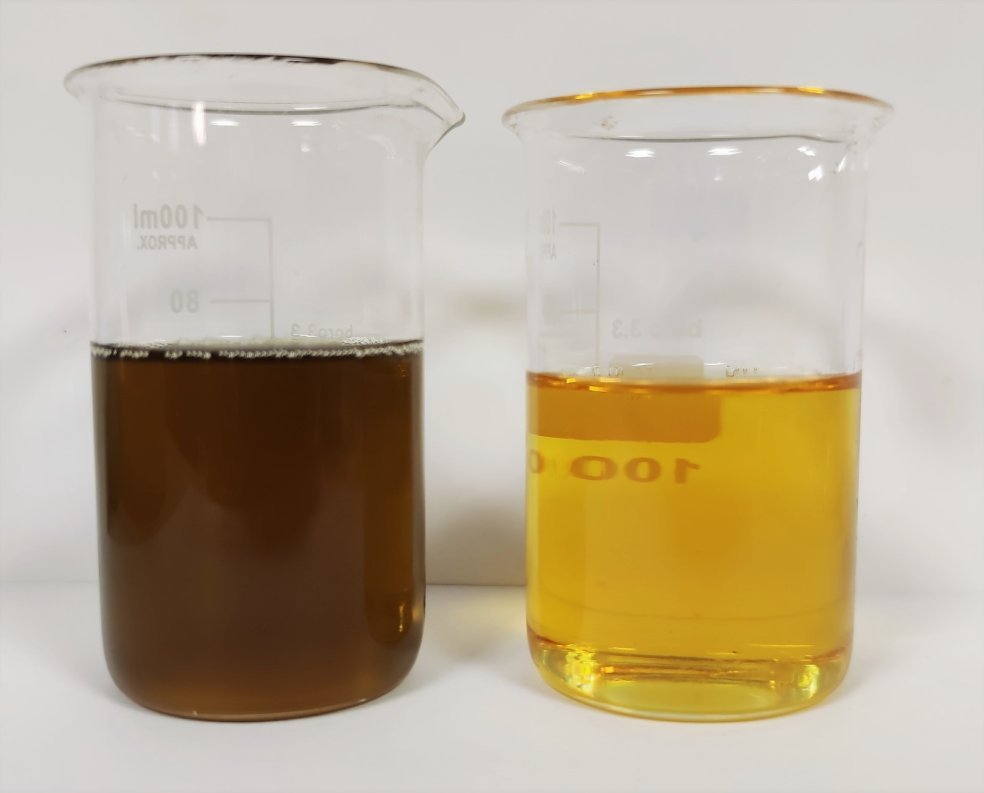
The process of refining crude oil is multi-stage and quite complex. Depending on the initial parameters of raw materials, each stage requires significant technological efforts. And the manufacturer does not always manage to achieve the planned indicators.
The Novasvit company offers optimized adsorption-membrane technology of vacuum filtration with FHDS membrane - micron rating of 0.1 μm, which can be used in the following processes:
- bleaching of refined oils
- removal of polycyclic aromatic hydrocarbons
- purification of used cooking oils
- hydrofuse purification
- рurification of soapstocks
Bleaching of refined oils
The most difficult stage of vegetable oil refining is bleaching. This helps to improve aroma, taste, appearance and stability. This step removes unwanted substances including oxidation products, color pigments, phospholipids, soaps, free fatty acids and trace metals.
However, valuable compounds such as tocopherols and sterols can also be removed, resulting in a loss of oxidative stability. In general, it is very difficult to find a technology that, while removing "bad" pro-oxidants, leaves important antioxidants in the final product.
Therefore, bleaching or, more correctly, adsorption cleaning, in order to balance "quality" and "stability" in the most beneficial way, involves a complex technological process, which includes the correct selection of adsorbent, its amount, oil moisture, time and temperature of interaction.
Removal of polycyclic aromatic hydrocarbons
Polycyclic aromatic hydrocarbons are among the most toxic compounds in edible oils. These compounds are carcinogenic and can lead to tumors and cancer. Scientifically, they are divided into two parts: light surfactants (up to four rings) and heavy surfactants (more than four rings). The persistent nature of surfactants due to their high chemical stability and lipophilic nature leads to the appearance and significant accumulation of these compounds in the food chain, especially in fatty foods and vegetable oils. Causes of contamination of crude vegetable oils with polycyclic aromatic hydrocarbons:
- drying of raw materials with flue gases
- improper cleaning of tanks for storage and transportation
- the state of the environment
Purification of "used" cooking oils
In the frying process, vegetable oil is exposed to extremely high temperatures in the presence of air and moisture. Under such conditions, a complex series of chemical reactions takes place, which leads to the loss of both the quality and nutritional value of the cooking oil. Reheating the cooking oil initiates a series of chemical reactions, modifying the fatty components of the cooking oil through oxidation, hydrolysis, polymerization, and isomerization, ultimately leading to lipid peroxidation. As a result, compounds are formed, which, greatly worsening the organoleptic indicators, turn the vegetable oil into an oily mixture of dangerous substances.
But... almost all used cooking oils and fats can be purified and, depending on the results obtained, reused both in cooking and in the manufacture of:
- separation oils for construction
- technical lubricants
- varnishes and paints
- fodder in agriculture
- cute
- biodiesel
Removed impurities of food and other pollution also have their application - biogas plants.
Hydrofuse purification
The sludge after the degumming process is a complex mixture that contains a high content of water, phospholipids, oil and minor amounts of other components such as phytoglycolipids, phytosterols, tocopherols and fatty acids. This is a valuable raw material from which, after purification, lecithin, biologically active additives and surfactants are obtained
Purification soapstocks
Soapstocks contain sodium soap and caustic soda, as well as water, salt, sodium phosphates, gums, transferred neutral oil, dyes, oxidation byproducts, and various contaminants. They have several uses:
- alternative raw materials for biodiesel production
- an ingredient in animal feed
- for the production of liquid soap
But in order for soapstock to have a commercial perspective, it must be cleaned and processed beforehand.