
VACUUM MICROFILTRATION VMF
This technology is easy to operate, reliable, very economical, and can be operated without the attention of an operator. The principle of operation is as follows: a vacuum pump creates a vacuum in the container to which submersible tubular membrane fibers are connected through a pipeline. The fibers are immersed in the filtered medium, a vacuum is created, after which the purified liquid flows into the receiving container.
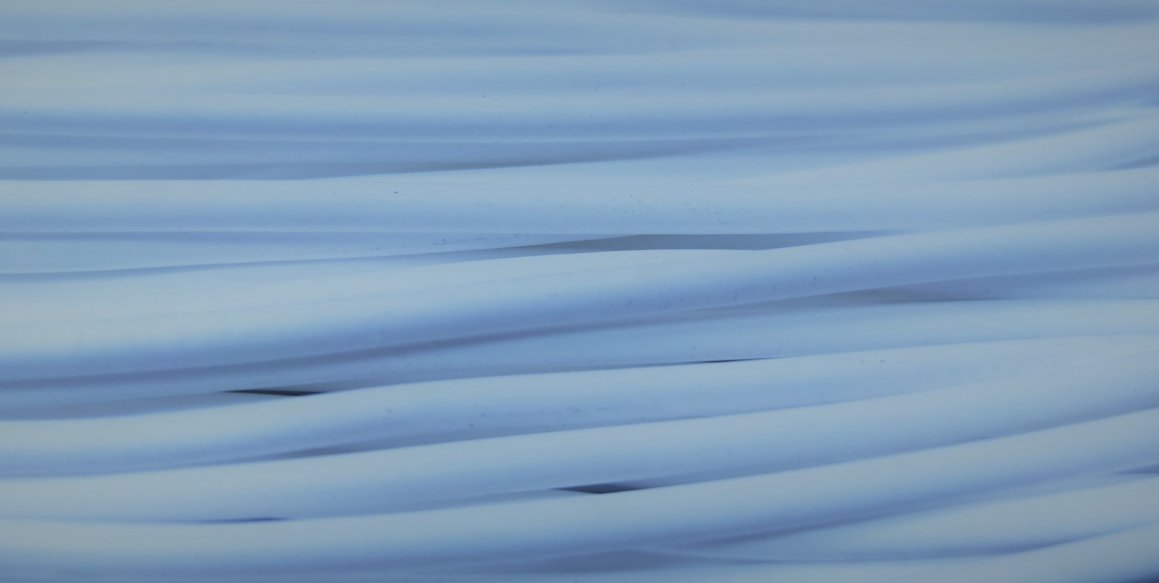
Photo: membrane fibers
The technology makes it possible both to purify a liquid medium from thick sediment, if the product is a liquid, and to thicken sediment almost to a dry state, if the product is insoluble particles.
We offer two types of membranes:
- hydrophilic
- hydrophobic
A hydrophilic membrane allows water to pass through and retains oil, while a hydrophobic membrane allows oil to pass through and retains water.
The micron rating of the membrane is 0.1 µm, which makes it possible to obtain a high-purity filtered product.
Filtration technology depends on the task. We
divide filtration into two types: submersible and float filtration. If it is
necessary to dry the insoluble residue (sediment) as much as
possible, the membrane is immersed to the bottom of the container with the
solution to be purified, in this case the filtration will take longer than with
float technology, since there is a large layer of sediment above the membrane,
which slows down the filtration. The float solution allows for faster
filtration, since the membrane floats in the upper part of the filtered
solution, where the amount of contaminants is minimal, and the adhering
sediment particles rapidly settle to the bottom during air flushing (purging)
of the membrane.