PURIFICATION OF GLYCERIN
The raw glycerin purification technology of the Novasvit company is ecological and economical. It not only reduces the amount of waste, but also ensures its reuse - with extremely low consumption of energy resources.
As a result, the final product, having reduced the cost price, receives a competitive price without excessive environmental burden.
The main polluting components of raw glycerin are triglycerides, free fatty acids, various organic residues, polymer glycerin, etc. In analytics, these components are called MONG (material organic non glycerol). It is these inclusions that affect the smell, taste and color of glycerin.
Another, no less important, contaminating component is an excess of unreacted methanol. It can be toxic in large amounts, especially when glycerin is used in animal feed or in the manufacture of pharmaceuticals.
Manufacturers who, in the process of obtaining biodiesel as a by-product, receive a glycerol phase deserve special attention in this matter. The fact is that the glycerol phase consists of glycerol mixed with each other directly and the remains of unused fatty acids, in an approximate ratio of 50/50.
So, first, by introducing an acidic reagent, you need to separate them. After the separation process into separate fractions, the fatty acids are returned to the production of biodiesel, and the glycerol is sent to the stage of sorption purification and filtration.
The quantitative and qualitative composition of the acid reagent, which is used to neutralize alkali, has a significant effect on the time of separation of free fatty acids and salts.
Removal of polluting components from crude glycerin is carried out in two stages:
1. Sorption. A specially developed sorption reagent is used as a sorbent.
2. Filtration. Filtration of glycerin from 250 - 325 mesh grinding sorbents is quite a difficult task for most existing filters, so we have created a technology that allows you to purify 80% crude glycerin without diluting it with water.
Purified glycerin becomes colorless, transparent, loses its specific smell.
The cost analysis for Novasvit's technology is a key factor that determines the potential of the raw glycerin purification process as a commercially important chemical for further industrial use.
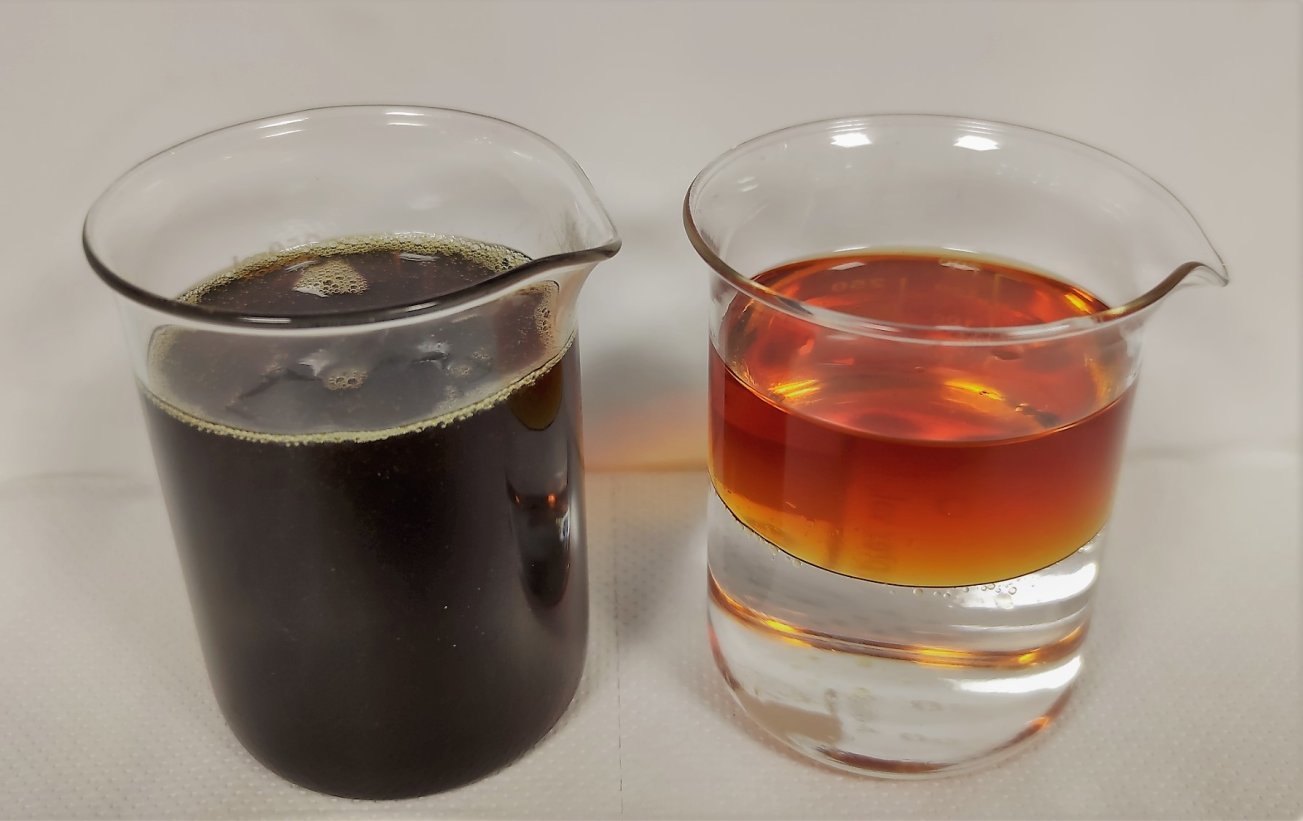
In the photo: in the measure on the left, the glycerol phase as it comes out after obtaining biodiesel, in the measure on the right - purified glycerol at the bottom, purified fatty acids at the top.